400-998-5282
专注多肽 服务科研

FRET底物DABCYL-LAQAVRSSR-EDANS代表了高效荧光猝灭的最佳尺寸,同时结合所有必要的氨基酸以产生一种活性底物,用于快速筛选抑制TNF-α转化酶(TACE,ADAM17内肽酶)活性的化合物。
编号:174424
CAS号:396716-14-6
单字母:Dabcyl-LAQAVRSSSR-EDANS
| 参考文献(References): | A.J. H.Gearing et al., Nature, 370, 555 (1994) K.M. Mohler et al., Nature, 370, 218 (1994) Becker BF, et al. Biol Chem, 383, 1821-6 (2002) Mohler KM, et al., Nature, 370, 218-20. (1994) |
FRET底物DABCYL-LAQAVRSSR-EDANS代表了高效荧光猝灭的最佳尺寸,同时结合所有必要的氨基酸以产生一种活性底物,用于快速筛选抑制TNF-α转化酶(TACE,ADAM17内肽酶)活性的化合物。
The FRET substrate DABCYL-LAQAVRSSSR-EDANS represents the optimal size for efficient fluorescent quenching, while incorporating all of the necessary amino acids to yield a viable substrate to be used for rapid screening of compounds for inhibition of TNF-α converting enzyme (TACE, ADAM17 endopeptidase) activity.
TNF-α通过TNF-α-FW裂解酶(TACE)从细胞膜上脱落。将TACE底物与重组人TACE孵育产生特异性切割以恢复淬灭的荧光。该底物广泛用于筛选TNF-α转化酶(TACE,ADAM17内肽酶)活性的抑制剂。在应用中,它用作TACE FRET底物I,并且可以作为三氟乙酸盐获得。
TNF-a is shed from cell membranes by TNF-a-FW cleaving enzyme (TACE). Incubation of the TACE substrate with recombinant human TACE gives a specific cleavage to restore the quenched fluorescence. The substrate is widely used to screen inhibitors of TNF-α converting enzyme (TACE, ADAM17 endopeptidase) activity. On application is its use as a TACE FRET Substrate I and it is available as a Trifluoroacetate Salt.
DABCYL TNF-αEDANS(-4至+6)(人)三氟乙酸盐是一种精细化学品,已被证明可用于研究。它是合成复杂化合物的多功能构件,可用作合成特殊化学品的反应组分。该化合物是一种高质量的试剂,可用作合成其他化合物的中间体。
DABCYL-TNF-alpha-EDANS (-4 to +6) (human) trifluoroacetate salt is a fine chemical that has been shown to be useful in research. It is a versatile building block for the synthesis of complex compounds and can be used as a reaction component for the synthesis of speciality chemicals. The compound is a high quality reagent, which can be used as an intermediate for the synthesis of other chemical compounds.
TACE FRET底物I衍生自TNFα裂解酶(TACE)识别的pro-TNFα的裂解序列。TNFα可能是通过TNFα裂解酶(TACE)从细胞膜上脱落的。将TACE底物与重组人TACE孵育产生特异性切割以恢复淬灭的荧光。该底物广泛用于筛选TNF转化酶抑制剂。
TACE FRET substrate I that is derived from the cleavage sequence of pro-TNFa recognized by the TNFa-cleaving enzyme (TACE). TNFa is presumably shed from cell membranes by TNFa-cleaving enzyme (TACE). Incubation of the TACE substrate with recombinant human TACE gives a specific cleavage to restore the quenched fluorescence. The substrate is widely used to screen inhibitors of TNF-convertase.
Definition
Apoptosis or programmed cell death is a normal component of the development and health of multicellular organisms. Cells die in response to a variety of stimuli and during apoptosis they do so in a controlled, regulated fashion.
Discovery
In 1885, Flemming W described the process of programmed cell death. John Kerr's discovery, in late 1960s, initially called "shrinkage necrosis" but which he later renamed "apoptosis", came about when his attention was caught by a curious form of liver cell death during his studies of acute liver injury in rats 1,2. Kerr in 1972 proposed the term apoptosis is for mechanism of controlled cell deletion, which appears to play a complementary but opposite role to mitosis in the regulation of animal cell populations. Its morphological features suggest that it is an active, inherently programmed phenomenon, and it has been shown that it can be initiated or inhibited by a variety of environmental stimuli, both physiological and pathological 3.
Structural Characteristics
Heterodimerization between members of the Bcl-2 family of proteins is a key event in the regulation of programmed cell death. The molecular basis for heterodimer formation was investigated by determination of the solution structure of a complex between the survival protein Bcl-xL and the death-promoting region of the Bcl-2-related protein Bak. The structure and binding affinities of mutant Bak peptides indicate that the Bak peptide adopts an amphipathic helix that interacts with Bcl-xL through hydrophobic and electrostatic interactions. Mutations in full-length Bak that disrupt either type of interaction inhibit the ability of Bak to heterodimerize with Bcl-xL 4.
The structure of the 16–amino acid peptide complexed with a biologically active deletion mutant of Bcl-xL was determined by nuclear magnetic resonance spectroscopy (NMR). The structure was determined from a total of 2813 NMR-derived restraints and is well defined by the NMR data. The Bak peptide forms a helix when complexed to Bcl-xL. The COOH terminal portion of the Bak peptide interacts predominantly with residues in the BH2 and BH3 regions. Melanoma inhibitor of apoptosis (ML-IAP) is a potent anti-apoptotic protein that is upregulated in a number of melanoma cell lines but not expressed in most normal adult tissues. Overexpression of IAP proteins, such as ML-IAP or the ubiquitously expressed X-chromosome-linked IAP (XIAP), in human cancers has been shown to suppress apoptosis induced by a variety of stimuli. X-ray crystal structures of ML-IAP-BIR in complex with Smac- and phage-derived peptides, together with peptide structure−activity-relationship data, indicate that the peptides can be modified to provide increased binding affinity and selectivity for ML-IAP-BIR relative to XIAP-BIR3 5.
Mode of Action
Upon receiving specific signals instructing the cells to undergo apoptosis a number of distinctive changes occur in the cell. Families of proteins known as caspases are typically activated in the early stages of apoptosis. These proteins breakdown or cleave key cellular components that are required for normal cellular function including structural proteins in the cytoskeleton and nuclear proteins such as DNA repair enzymes. The caspases can also activate other degradative enzymes such as DNases, which begin to cleave the DNA in the nucleus.
Apoptotic cells display distinctive morphology during the apoptotic process. Typically, the cell begins to shrink following the cleavage of lamins and actin filaments in the cytoskeleton. The breakdown of chromatin in the nucleus often leads to nuclear condensation and in many cases the nuclei of apoptotic cells take on a "horse-shoe" like appearance. Cells continue to shrink, packaging themselves into a form that allows for their removal by macrophages. There are a number of mechanisms through which apoptosis can be induced in cells. The sensitivity of cells to any of these stimuli can vary depending on a number of factors such as the expression of pro- and anti-apoptotic proteins (eg. the Bcl-2 proteins or the Inhibitor of Apoptosis Proteins), the severity of the stimulus and the stage of the cell cycle. The Bcl-2 family of proteins plays a central role in the regulation of apoptotic cell death induced by a wide variety of stimuli. Some proteins within this family, including Bcl-2 and Bcl-xL, inhibit programmed cell death, and others, such as Bax and Bak, can promote apoptosis 6, 7.
Functions
For development, Apoptosis is as needed for proper development as mitosis is. Examples: The resorption of the tadpole tail at the time of its metamorphosis into a frog occurs by apoptosis.
Integrity of the organism, Apoptosis is needed to destroy cells that represent a threat to the integrity of the organism. Examples: Cells infected with viruses8.
Cells of the immune system, as cell-mediated immune responses wane, the effector cells must be removed to prevent them from attacking body constituents. CTLs induce apoptosis in each other and even in themselves 9.
Cells with DNA damage, damage to its genome can cause a cell to disrupt proper embryonic development leading to birth defects to become cancerous.
References
1. Kerr JF (1965). A histochemical study of hypertrophy and ischaemic injury of rat liver with special reference to changes in lysosomes. Journal of Pathology and Bacteriology, 90(90):419-435.
2. Kerr JF, Wyllie AH, Currie AR (1972). Apoptosis: a basic biological phenomenon with wide-ranging implications in tissue kinetics. Br. J. Cancer., 26(4):239-257.
3. O'Rourke MG, Ellem KA (2000). John Kerr and apoptosis. Med. J. Aust., 173(11-12): 616-617.
4. Franklin MC, Kadkhodayan S, Ackerly H, Alexandru D, Distefano MD, Elliott LO, Flygare JA, Mausisa G, Okawa DC, Ong D, Vucic D, Deshayes K, Fairbrother WJ (2003). Structure and function analysis of peptide antagonists of melanoma inhibitor of apoptosis (ML-IAP). Biochemistry, 42(27):8223-8231.
5. Sattler M, Liang H, Nettesheim D, Meadows RP, Harlan JE, Eberstadt M, Yoon HS, Shuker SB, Chang BS, Minn AJ, Thompson CB, Fesik SW (1997). Structure of bcl-xl-bak peptide complex: recognition between regulators of apoptosis. Science, 275(5302):983-986.
6. Hanada M, Aimé-Sempé C, Sato T, Reed JC (1995). Structure-function analysis of Bcl-2 protein. Identification of conserved domains important for homodimerization with Bcl-2 and heterodimerization with Bax. J. Biol. Chem., 270(20):11962-11969.
7. Cheng EHY, Levine B, Boise LH, Thompson CB, Hardwic JM (1996). Bax-independent inhibition of apoptosis by Bcl-xL.Nature, 379:554-556.
8. Alimonti JB, Ball TB, Fowke KR (2003). Mechanisms of CD4+ T lymphocyte cell death in human immunodeficiency virus infection and AIDS. J Gen Virology., 84(84): 1649-1661.
9. Werlen G, Hausmann B, Naeher D, Palmer E (2003). Signaling life and death in the thymus: timing is everything. Science. 299(5614):1859-1863.
DABCYL标记说明
4-(4-二甲氨基苯基偶氮)苯甲酰基(Dabcyl)是一种发色团,常与荧光团(如EDANS)结合用作猝灭剂。Dabcyl/EDANS FRET(荧光共振能量转移)对的福斯特半径为3.3纳米。
4-(4-Dimethylaminophenylazo)benzoyl (Dabcyl) is a chromophor often used as a quencher in conjunction with a fluorophore (e.g., EDANS). Dabcyl/EDANS FRET pair have a Forster radius of 3.3 nm.
DABCYL Related Articles:
Single-cell assays using integrated continuous-flow microfluidics.
Ng, Ee Xien, Myat Noe Hsu, Guoyun Sun, and Chia-Hung Chen. Methods in Enzymology 628 (2019): 59-94.
Characterization of the Altai Maral Chymosin Gene, Production of a Chymosin Recombinant Analog in the Prokaryotic Expression System, and Analysis of Its Several Biochemical Properties.
Belenkaya, S. V., A. A. Bondar, T. A. Kurgina, V. V. Elchaninov, A. Yu Bakulina, E. A. Rukhlova, O. I. Lavrik, A. A. Ilyichev, and D. N. Shcherbakov. Biochemistry (Moscow), 2020.
Urinary detection of early responses to checkpoint blockade and of resistance to it via protease-cleaved antibody-conjugated sensors.
Mac, Quoc D., Anirudh Sivakumar, Hathaichanok Phuengkham, Congmin Xu, James R. Bowen, Fang-Yi Su, Samuel Z. Stentz et al. Nature Biomedical Engineering (2022): 1-15.
Glossary: EDANS
5-[(2-Aminoethyl)amino]naphthalene-1-sulfonyl (EDANS) is fluorophor with an excitation at 340 nm ▉ and emission of 490 nm ▉. EDANS is often paired together with acceptors like dabcyl for FRET experiements.
Properties of Hemoglobin Decolorized with a Histidine-Specific Protease.
Shi, Jing, et al. Journal of Food Science 80.6 (2015): E1202-E1208.
| DOI | 名称 | |
|---|---|---|
| 10.1515/BC.2002.205 | Application of peptides containing the cleavage sequence of pro-TNFalpha in assessing TACE activity of whole cells | 下载 |
| 10.1021/bi0361766 | Identification of novel inhibitors of the SARS coronavirus main protease 3CLpro | 下载 |
| 10.1016/j.ab.2003.12.035 | Characterization of Mca-Lys-Pro-Leu-Gly-Leu-Dpa-Ala-Arg-NH2, a fluorogenic substrate with increased specificity constants for collagenases and tumor necrosis factor converting enzyme | 下载 |
多肽DABCYL-Leu-Ala-Gln-Ala-Val-Arg-Ser-Ser-Ser-Arg-EDANS的合成步骤:
1、合成CTC树脂:称取2.77g CTC Resin(如初始取代度约为0.7mmol/g)和2.33mmol Fmoc-Arg(Pbf)-OH于反应器中,加入适量DCM溶解氨基酸(需要注意,此时CTC树脂体积会增大好几倍,避免DCM溶液过少),再加入5.82mmol DIPEA(Mw:129.1,d:0.740g/ml),反应2-3小时后,可不抽滤溶液,直接加入1ml的HPLC级甲醇,封端半小时。依次用DMF洗涤2次,甲醇洗涤1次,DCM洗涤一次,甲醇洗涤一次,DCM洗涤一次,DMF洗涤2次(这里使用甲醇和DCM交替洗涤,是为了更好地去除其他溶质,有利于后续反应)。得到 Fmoc-Arg(Pbf)-CTC Resin。结构图如下:

2、脱Fmoc:加3倍树脂体积的20%Pip/DMF溶液,鼓氮气30分钟,然后2倍树脂体积的DMF 洗涤5次。得到 H2N-Arg(Pbf)-CTC Resin 。(此步骤脱除Fmoc基团,茚三酮检测为蓝色,Pip为哌啶)。结构图如下:

3、缩合:取5.82mmol Fmoc-Ser(tBu)-OH 氨基酸,加入到上述树脂里,加适当DMF溶解氨基酸,再依次加入11.63mmol DIPEA,5.53mmol HBTU。反应30分钟后,取小样洗涤,茚三酮检测为无色。用2倍树脂体积的DMF 洗涤3次树脂。(洗涤树脂,去掉残留溶剂,为下一步反应做准备)。得到Fmoc-Ser(tBu)-Arg(Pbf)-CTC Resin。氨基酸:DIPEA:HBTU:树脂=3:6:2.85:1(摩尔比)。结构图如下:

4、依次循环步骤二、步骤三,依次得到
H2N-Ser(tBu)-Arg(Pbf)-CTC Resin
Fmoc-Ser(tBu)-Ser(tBu)-Arg(Pbf)-CTC Resin
H2N-Ser(tBu)-Ser(tBu)-Arg(Pbf)-CTC Resin
Fmoc-Ser(tBu)-Ser(tBu)-Ser(tBu)-Arg(Pbf)-CTC Resin
H2N-Ser(tBu)-Ser(tBu)-Ser(tBu)-Arg(Pbf)-CTC Resin
Fmoc-Arg(Pbf)-Ser(tBu)-Ser(tBu)-Ser(tBu)-Arg(Pbf)-CTC Resin
H2N-Arg(Pbf)-Ser(tBu)-Ser(tBu)-Ser(tBu)-Arg(Pbf)-CTC Resin
Fmoc-Val-Arg(Pbf)-Ser(tBu)-Ser(tBu)-Ser(tBu)-Arg(Pbf)-CTC Resin
H2N-Val-Arg(Pbf)-Ser(tBu)-Ser(tBu)-Ser(tBu)-Arg(Pbf)-CTC Resin
Fmoc-Ala-Val-Arg(Pbf)-Ser(tBu)-Ser(tBu)-Ser(tBu)-Arg(Pbf)-CTC Resin
H2N-Ala-Val-Arg(Pbf)-Ser(tBu)-Ser(tBu)-Ser(tBu)-Arg(Pbf)-CTC Resin
Fmoc-Gln(Trt)-Ala-Val-Arg(Pbf)-Ser(tBu)-Ser(tBu)-Ser(tBu)-Arg(Pbf)-CTC Resin
H2N-Gln(Trt)-Ala-Val-Arg(Pbf)-Ser(tBu)-Ser(tBu)-Ser(tBu)-Arg(Pbf)-CTC Resin
Fmoc-Ala-Gln(Trt)-Ala-Val-Arg(Pbf)-Ser(tBu)-Ser(tBu)-Ser(tBu)-Arg(Pbf)-CTC Resin
H2N-Ala-Gln(Trt)-Ala-Val-Arg(Pbf)-Ser(tBu)-Ser(tBu)-Ser(tBu)-Arg(Pbf)-CTC Resin
Fmoc-Leu-Ala-Gln(Trt)-Ala-Val-Arg(Pbf)-Ser(tBu)-Ser(tBu)-Ser(tBu)-Arg(Pbf)-CTC Resin
以上中间结构,均可在专肽生物多肽计算器-多肽结构计算器中,一键画出。
最后再经过步骤二得到 H2N-Leu-Ala-Gln(Trt)-Ala-Val-Arg(Pbf)-Ser(tBu)-Ser(tBu)-Ser(tBu)-Arg(Pbf)-CTC Resin,结构如下:

5、4-二甲胺偶氮苯-4’-羧酸(DABCYL)反应连接:在上述树脂中,加入适当DMF后,再加入5.82mmol4-二甲胺偶氮苯-4’-羧酸(DABCYL)到树脂中,再加入11.63mmol DIPEA,鼓氮气反应30分钟。用2倍树脂体积的DMF 洗涤3次树脂(洗涤树脂,去掉残留溶剂,为下一步反应做准备)。 得到DABCYL-Leu-Ala-Gln(Trt)-Ala-Val-Arg(Pbf)-Ser(tBu)-Ser(tBu)-Ser(tBu)-Arg(Pbf)-CTC Resin。 结构如下:

6、全保护切割:配置0.5%TFA/DCM溶液,溶液体积约为树脂体积的3倍。再次用DCM洗涤树脂2遍(去除残留DMF),后将配置好的溶液倒入到反应器中,反应30分钟。抽滤树脂,收集滤液(此时多肽已经从树脂上分离,存在于滤液中)。多肽序列为 DABCYL-Leu-Ala-Gln(Trt)-Ala-Val-Arg(Pbf)-Ser(tBu)-Ser(tBu)-Ser(tBu)-Arg(Pbf)-CTC Resin。 在滤液中添加DIEPA,调PH至7-8。用饱和NaHCO3洗涤滤液,分离出DCM层溶液。可适当旋蒸DCM层溶液,减少有机溶剂。再次加入1或2倍体积的乙酸乙酯,用稀HCl溶液调PH至微酸性,将多肽从DCM层萃取到乙酸乙酯层。用饱和NaCl洗涤2次乙酸乙酯层。用无水硫酸镁吸收乙酸乙酯层的水分。通过减压旋蒸,直接将乙酸乙酯完全旋蒸掉,得到晶体状固体多肽,用于下一步C端反应。或通过减压旋蒸保留适量乙酸乙酯的溶液体积,加入冰乙醚析出 多肽,然后对多肽进行烘干操作即可用于下一步C端反应。DABCYL-Leu-Ala-Gln(Trt)-Ala-Val-Arg(Pbf)-Ser(tBu)-Ser(tBu)-Ser(tBu)-Arg(Pbf)-COOH的结构图如下。

7、5-(2-氨基乙氨基)-1-萘磺酸反应连接:在上述树脂中,加入适当DMF后,再加入5.82mmol 5-(2-氨基乙氨基)-1-萘磺酸到树脂中,再加入11.63mmol DIPEA、5.53mmol HBTU,鼓氮气反应30分钟。用2倍树脂体积的DMF 洗涤3次树脂(洗涤树脂,去掉残留溶剂,为下一步反应做准备)。 得到 DABCYL-Leu-Ala-Gln(Trt)-Ala-Val-Arg(Pbf)-Ser(tBu)-Ser(tBu)-Ser(tBu)-Arg(Pbf)-EDANS。 结构如下:

8、切割:6倍树脂体积的切割液(或每1g树脂加8ml左右的切割液),摇床摇晃 2小时,过滤掉树脂,用冰无水乙醚沉淀滤液,并用冰无水乙醚洗涤沉淀物3次,最后将沉淀物放真空干燥釜中,常温干燥24小试,得到粗品DABCYL-Leu-Ala-Gln-Ala-Val-Arg-Ser-Ser-Ser-Arg-EDANS。结构图见产品结构图。
切割液选择:1)TFA:H2O=95%:5%
2)TFA:H2O:TIS=95%:2.5%:2.5%
3)三氟乙酸:茴香硫醚:1,2-乙二硫醇:苯酚:水=87.5%:5%:2.5%:2.5%:2.5%
(前两种适合没有容易氧化的氨基酸,例如Trp、Cys、Met。第三种适合几乎所有的序列。)
9、纯化冻干:使用液相色谱纯化,收集目标峰液体,进行冻干,获得蓬松的粉末状固体多肽。不过这时要取小样复测下纯度 是否目标纯度。
10、最后总结:
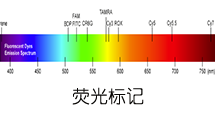
杭州专肽生物技术有限公司(ALLPEPTIDE https://www.allpeptide.com)主营定制多肽合成业务,提供各类长肽,短肽,环肽,提供各类修饰肽,如:荧光标记修饰(CY3、CY5、CY5.5、CY7、FAM、FITC、Rhodamine B、TAMRA等),功能基团修饰肽(叠氮、炔基、DBCO、DOTA、NOTA等),同位素标记肽(N15、C13),订书肽(Stapled Peptide),脂肪酸修饰肽(Pal、Myr、Ste),磷酸化修饰肽(P-Ser、P-Thr、P-Tyr),环肽(酰胺键环肽、一对或者多对二硫键环),生物素标记肽,PEG修饰肽,甲基化修饰肽
以上所有内容,为专肽生物原创内容,请勿发布到其他网站上。