浙江省科技型企业---加速您的多肽研究
首页 >多肽产品 >M细胞靶向肽GRGDS

多肽产品

96426-21-0,M细胞靶向肽GRGDS,H2N-Gly-Arg-Gly-Asp-Ser-COOH,H2N-GRGDS-OH,杭州专肽生物的产品

M细胞靶向肽GRGDS

GRGDS由5个氨基酸组成,它是一种M细胞靶向肽,可以特异性地结合M细胞顶端表达的β1整合素。

编号:115150

CAS号:96426-21-0/2828433-23-2

单字母:H2N-GRGDS-OH

纠错
  • 编号:115150
    中文名称:M细胞靶向肽GRGDS
    英文名:GRGDS
    CAS号:96426-21-0,free base
    2828433-23-2,TFA盐
    单字母:H2N-GRGDS-OH
    三字母:H2N

    N端氨基:N-terminal amino group。在肽或多肽链中含有游离a-氨基的氨基酸一端。在表示氨基酸序列时,通常将N端放在肽链的左边。

    -Gly

    甘氨酸:glycine。系统命名为 2-氨基乙酸。是编码氨基酸中没有旋光性的最简单的氨基酸,因具有甜味而得名。符号:G,Gly。

    -Arg

    L-精氨酸:arginine。系统命名为(2S)-氨基-5-胍基戊酸。在生理条件下带正电荷,为编码氨基酸。是幼小哺乳动物的必需氨基酸。符号:R,Arg。

    -Gly

    甘氨酸:glycine。系统命名为 2-氨基乙酸。是编码氨基酸中没有旋光性的最简单的氨基酸,因具有甜味而得名。符号:G,Gly。

    -Asp

    L-天冬氨酸:aspartic acid。系统命名为(2S)-氨基-丁二酸。是编码氨基酸,又是神经递质。符号:D,Asp。D-天冬氨酸存在于多种细菌的细胞壁和短杆菌肽A中。

    -Ser

    L-丝氨酸:serine。系统命名为(2S)-氨基-3-羟基丙酸。是编码氨基酸。因可从蚕丝中获得而得名。符号:S,Ser。在丝原蛋白及某些抗菌素中含有 D-丝氨酸。

    -OH

    C端羧基:C-terminal carboxyl group。在肽或多肽链中含有游离羧基的氨基酸一端。在表示氨基酸序列时,通常将C端放在肽链的右边。

    氨基酸个数:5
    分子式:C17H30N8O9
    平均分子量:490.47
    精确分子量:490.21
    等电点(PI):10.56
    pH=7.0时的净电荷数:0.98
    平均亲水性:2.1
    疏水性值:-1.92
    外观与性状:白色粉末状固体
    消光系数:-
    来源:人工化学合成,仅限科学研究使用,不得用于人体。
    纯度:95%、98%
    盐体系:可选TFA、HAc、HCl或其它
    生成周期:2-3周
    储存条件:负80℃至负20℃
    标签:靶向多肽   

  • GRGDS由5个氨基酸组成,它是一种M细胞靶向肽,可以特异性地结合M细胞顶端表达的β1整合素。

    Gly-Arg-Gly-Asp-Ser (TFA) 是一种五肽,构成了糖蛋白,骨桥蛋白与细胞的结合域。Gly-Arg-Gly-Asp-Ser (TFA) 与整合素整联蛋白受体 (integrin receptor) αvβ3 和 αvβ5 结合,IC50 估算值为 ∼5 和 ∼6.5 μM。

    Gly-Arg-Gly-Asp-Ser (TFA) is a pentapeptide that forms the cell-binding domain of a glycoprotein, osteopontin. Gly-Arg-Gly-Asp-Ser binds to integrin receptors αvβ3 and αvβ5 with estimated IC50 of ∼5 and ∼6.5 μM.

    GRGDS醋酸盐是一种合成的整合素拮抗剂,是来源于纤连蛋白的细胞结合区的细胞结合蛋白结构域。

    GRGDS acetate, a synthetic integrin antagonist, is a cell-binding protein domain derived from the cell-binding region of fibronectin.


    Peptide H-GRGDS-OH is a Research Peptide with significant interest within the field academic and medical research. Recent citations using H-GRGDS-OH include the following: Amide-linkage formed between ammonia plasma treated poly(D,L-lactide acid) scaffolds and bio-peptides: Enhancement of cell adhesion and osteogenic ZX Xu, T Li, ZM Zhong, DS Zha, SH Wu, FQ Liu - , 2011 - Wiley Online Libraryhttps://onlinelibrary.wiley.com/doi/abs/10.1002/bip.21635 Collagen-like polypeptide poly (Pro-Hyp-Gly) conjugated with Gly-Arg-Gly-Asp-Ser and Pro-His-Ser-Arg-Asn peptides enhances cell adhesion, migration, and Y Shibasaki, S Hirohara , K Terada, T Ando - Peptide , 2011 - Wiley Online Libraryhttps://onlinelibrary.wiley.com/doi/abs/10.1002/bip.21551 Collagen-Like Polypeptide Poly (Pro-Hyp-Gly) Conjugated with Fibronectin-Derived Peptides Enhances the Cell Adhesion, Migration and Stratification Y Shibasaki, S Hirohara , K Terada, T Ando - European Conference of , 2012 - Springerhttps://link.springer.com/chapter/10.1007/978-3-642-23508-5_282 Peptide immobilization on polyethylene terephthalate surfaces to study specific endothelial cell adhesion, spreading and migration Y Lei, M Remy, C Labrugacašre, MC Durrieu - Journal of Materials Science , 2012 - Springerhttps://link.springer.com/article/10.1007/s10856-012-4736-x The synergy peptide PHSRN and the adhesion peptide RGD mediate cell adhesion through a common mechanism Y Feng, M Mrksich - Biochemistry, 2004 - ACS Publicationshttps://pubs.acs.org/doi/abs/10.1021/bi049174+ Conjugation of Arginine-Glycine-Aspartic Acid Peptides to Poly(ethylene oxide)-b-poly(Ã\x8eµ-caprolactone) Micelles for Enhanced Intracellular Drug Delivery to Metastatic XB Xiong , A Mahmud , H UludaÃ\x87 - , 2007 - ACS Publicationshttps://pubs.acs.org/doi/abs/10.1021/bm060967g Fabrication of endothelial cell-specific polyurethane surfaces co-immobilized with GRGDS and YIGSR peptides WS Choi, JW Bae, YK Joung , KD Park , MH Lee - Macromolecular , 2009 - Springerhttps://link.springer.com/article/10.1007/BF03218892 Peptide REDV-modified polysaccharide hydrogel with endothelial cell selectivity for the promotion of angiogenesis W Wang , L Guo, Y Yu, Z Chen - Journal of Biomedical , 2015 - Wiley Online Libraryhttps://onlinelibrary.wiley.com/doi/abs/10.1002/jbm.a.35306 Immobilization of Arg-Gly-Asp peptides on silk fibroin via Gly-Ala-Gly-Ala-Gly-Ser sequences T Hashimoto, Y Nakamura, S Kakinoki - Biotechnology , 2023 - Wiley Online Libraryhttps://onlinelibrary.wiley.com/doi/abs/10.1002/biot.202200139 Multifunctional peptide fibrils for biomedical materials S Kasai, Y Ohga, M Mochizuki, N Nishi - Peptide Science , 2004 - Wiley Online Libraryhttps://onlinelibrary.wiley.com/doi/abs/10.1002/bip.10565 Inhibition of angiogenesis in vitro by Arg-Gly-Asp-containing synthetic peptide. RF Nicosia , E Bonanno - The American journal of pathology, 1991 - ncbi.nlm.nih.govhttps://www.ncbi.nlm.nih.gov/pmc/articles/PMC1886093/ Poly (l-lysine)-GRGDS as a biomimetic surface modifier for poly (lactic acid) RA Quirk, WC Chan, MC Davies, SJB Tendler - Biomaterials, 2001 - Elsevierhttps://www.sciencedirect.com/science/article/pii/S0142961200002507 Attachment of osteoblastic cells to hydroxyapatite crystals by a synthetic peptide (Glu7-Pro-Arg-Gly-Asp-Thr) containing two functional sequences of bone sialoprotein R Fujisawa, M Mizuno, Y Nodasaka, K Yoshinori - Matrix biology, 1997 - Elsevierhttps://www.sciencedirect.com/science/article/pii/S0945053X9790113X Inhibition effect of Gly-Arg-Gly-Asp-Ser (GRGDS) and Arg-Gly-Asp (RGD) Bioactive Peptides on Angiotensin-Converting Enzyme Activity Purified from Human Serum R AdanaÃ\x85Åž, V TurkoÃ\x84Åžlu , Z BaÃ\x85Åž - Journal of the Institute of Science and , 2023 - dergipark.org.trhttps://dergipark.org.tr/en/pub/jist/issue/80709/1312143 Structure and function of RGD peptides involved in bone biology P Schaffner, MM Dard - Cellular and Molecular Life Sciences CMLS, 2003 - Springerhttps://link.springer.com/article/10.1007/s000180300008 Improved potency and specificity of Arg-Gly-Asp (RGD) containing peptides as fibrinogen receptor blocking drugs MR Foster, EJ Hornby, S Brown, J Kitchin, M Hann - Thrombosis research, 1993 - Elsevierhttps://www.sciencedirect.com/science/article/pii/004938489390190Y Characterization of endothelial cell differential attachment to fibrin and fibrinogen and its inhibition by Arg-Gly-Asp-containing peptides MC Chang, BR Wang, TF Huang - Thrombosis and , 1995 - thieme-connect.comhttps://www.thieme-connect.com/products/ejournals/abstract/10.1055/s-0038-1649810 Conformation/activity studies of rationally designed potent anti-adhesive RGD peptides M Gurrath, G Muller, H Kessler - European Journal of , 1992 - Wiley Online Libraryhttps://febs.onlinelibrary.wiley.com/doi/abs/10.1111/j.1432-1033.1992.tb17495.x Inhibition of tumor cell-induced platelet aggregation and experimental tumor metastasis by the synthetic Gly-Arg-Gly-Asp-Ser peptide KK Ugen , M Mahalingam, PA Klein - JNCI: Journal of the , 1988 - academic.oup.comhttps://academic.oup.com/jnci/article-abstract/80/18/1461/943466 Synthesis of Arg-Gly-Asp (RGD) Sequence Conjugated Thermo-Reversible Gel via the PEG Spacer Arm as an Extracellular Matrix for a Pheochromocytoma Cell KH Park, MH Kim, SH Park , HJ Lee - Bioscience , 2004 - academic.oup.comhttps://academic.oup.com/bbb/article-abstract/68/11/2224/5952908 Immobilization of Arg-Gly-Asp (RGD) sequence in a thermosensitive hydrogel for cell delivery using pheochromocytoma cells (PC12) KH Park, K Yun - Journal of bioscience and bioengineering, 2004 - Elsevierhttps://www.sciencedirect.com/science/article/pii/S1389172304702212 Enhancement of the adhesion of fibroblasts by peptide containing an Arg-Gly-Asp sequence with poly (ethylene glycol) into a thermo-reversible hydrogel as a KH Park, K Na , HM Chung - Biotechnology letters, 2005 - Springerhttps://link.springer.com/article/10.1007/s10529-004-8297-z Certification of Gibroblase Cell Adhesion and Spreading Mediated by Arg-Gly-Asp (RGD) Sequence on Thermo-Reversible Hydrogel K Na , KH PARK - Journal of microbiology and biotechnology, 2001 - koreascience.krhttps://koreascience.kr/article/JAKO200111920914209.page Fibroblast attachment to Arg-Gly-Asp peptide-immobilized poly (γ-methyl L-glutamate) K Kugo, M Okuno, K Masuda, J Nishino - Journal of , 1994 - Taylor & Francishttps://www.tandfonline.com/doi/abs/10.1163/156856294X00059 Triflavin, an Arg-Gly-Asp-containing peptide, inhibits human cervical carcinoma (HeLa) cell-substratum adhesion through an RGD-dependent mechanism JR Sheu, CH Lin, HC Peng, TF Huang - Peptides, 1994 - Elsevierhttps://www.sciencedirect.com/science/article/pii/0196978194901147 Self-assembled nanoparticles based on glycol chitosan bearing 5beta-cholanic acid for RGD peptide delivery JH Park , S Kwon , JO Nam , RW Park , H Chung - Journal of Controlled , 2004 - Elsevierhttps://www.sciencedirect.com/science/article/pii/S0168365903006072 Functionalization of electrospun poly (Ã\x8eµ-caprolactone) fibers with the extracellular matrix-derived peptide GRGDS improves guidance of Schwann cell migration and J Bockelmann, K Klinkhammer, A von Holst - Engineering Part A, 2011 - liebertpub.comhttps://www.liebertpub.com/doi/abs/10.1089/ten.tea.2010.0369 Modulation of differentiation and mineralization of marrow stromal cells cultured on biomimetic hydrogels modified with Arg-Gly-Asp containing peptides H Shin , K Zygourakis - Research Part A: An , 2004 - Wiley Online Libraryhttps://onlinelibrary.wiley.com/doi/abs/10.1002/jbm.a.30027 Attachment, proliferation, and migration of marrow stromal osteoblasts cultured on biomimetic hydrogels modified with an osteopontin-derived peptide H Shin , K Zygourakis , MC Farach-Carson - Biomaterials, 2004 - Elsevierhttps://www.sciencedirect.com/science/article/pii/S0142961203006021 Inhibitory effects of Arg-Gly-Asp (RGD) peptide on cell attachment and migration in a human lens epithelial cell line H Oharazawa, N Ibaraki, K Ohara, VN Reddy - Ophthalmic research, 2005 - karger.comhttps://karger.com/ore/article-abstract/37/4/191/257895 The conjugation of RGDS peptide with CM-chitin augments the peptide-mediated inhibition of tumor metastasis H Komazawa, I Saiki, Y Igarashi, I Azuma, S Tokura - Carbohydrate , 1993 - Elsevierhttps://www.sciencedirect.com/science/article/pii/014486179390063A Inhibition of tumor metastasis by Arg-Gly-Asp-Ser (RGDS) peptide conjugated with sulfated chitin derivative, SCM-chitin-RGDS H Komazawa, I Saiki, N Nishikawa, J Yoneda - Clinical & Experimental , 1993 - Springerhttps://link.springer.com/article/10.1007/BF00054939 Soluble Arg-Gly-Asp peptides reduce collagen accumulation in cultured rat hepatic stellate cells H Iwamoto, H Sakai, K Kotoh, M Nakamuta - Digestive diseases and , 1999 - Springerhttps://link.springer.com/article/10.1023/A:1026633302985 Evaluation of osteoblast-like cell viability and differentiation on the Gly-Arg-Gly-Asp-Ser peptide immobilized titanium dioxide nanotube via chemical grafting GH Kim, SW Park, K Lee, KD Yun - of Nanoscience and , 2016 - ingentaconnect.comhttps://www.ingentaconnect.com/contentone/asp/jnn/2016/00000016/00000002/art00022 Dynamic Forcing, a Method for Evaluating Activity and Selectivity Profiles of RGD (Arg-Gly-Asp) Peptides G Muller, M Gurrath, H Kessler - International Edition in , 1992 - Wiley Online Libraryhttps://onlinelibrary.wiley.com/doi/abs/10.1002/anie.199203261 Incorporation of adhesion peptides into nonadhesive hydrogels useful for tissue resurfacing DL Hern, JA Hubbell - Research: An Official Journal of The , 1998 - Wiley Online Libraryhttps://onlinelibrary.wiley.com/doi/abs/10.1002/(SICI)1097-4636(199802)39:2%3C266::AID-JBM14%3E3.0.CO;2-B The microenvironment of immobilized Arg-Gly-Asp peptides is an important determinant of cell adhesion BT Houseman, M Mrksich - Biomaterials, 2001 - Elsevierhttps://www.sciencedirect.com/science/article/pii/S0142961200002593 Characterization and development of RGD-peptide-modified poly(lactic acid-co-lysine) as an interactive, resorbable biomaterial AD Cook , JS Hrkach, NN Gao - Research: An Official , 1997 - Wiley Online Libraryhttps://onlinelibrary.wiley.com/doi/abs/10.1002/(SICI)1097-4636(19970615)35:4%3C513::AID-JBM11%3E3.0.CO;2-C novel Arg-Gly-Asp containing peptide specific for platelet aggregation and its effect on tumor metastasis: a possible mechanism of RGD peptide-mediated inhibition of A Isoai, Y Ueno, Y Giga-Hama, H Goto, H Kumagai - Cancer letters, 1992 - Elsevierhttps://www.sciencedirect.com/science/article/pii/030438359290241M

    Fibronectin is an extracellular matrix protein that plays a critical role in cell adhesion, migration, and differentiation. Fibronectin subunits are composed of repeating units of three types of modules: type I, type II, and type III. The active fragment of fibronectin refers to a small peptide sequence within the type III modules of fibronectin that has been shown to have potent biological activity.\nThe fibronectin active fragment, also known as the cell-binding domain or RGD domain, is a short peptide sequence consisting of the amino acid sequence Arg-Gly-Asp (RGD). This peptide sequence interacts with cell surface receptors known as integrins, which are important for mediating cell adhesion, migration, and signaling.\nThe fibronectin active fragment has been extensively studied as a research tool to investigate the mechanisms of cell adhesion and migration. It has also been used in tissue engineering applications to promote cell attachment and proliferation on synthetic biomaterials. This product is available as a 0.5mg vial.

    Fibronectin is an extracellular matrix protein that plays a critical role in cell adhesion, migration, and differentiation. Fibronectin subunits are composed of repeating units of three types of modules: type I, type II, and type III. The active fragment of fibronectin refers to a small peptide sequence within the type III modules of fibronectin that has been shown to have potent biological activity.\nThe fibronectin active fragment, also known as the cell-binding domain or RGD domain, is a short peptide sequence consisting of the amino acid sequence Arg-Gly-Asp (RGD). This peptide sequence interacts with cell surface receptors known as integrins, which are important for mediating cell adhesion, migration, and signaling.\nThe fibronectin active fragment has been extensively studied as a research tool to investigate the mechanisms of cell adhesion and migration. It has also been used in tissue engineering applications to promote cell attachment and proliferation on synthetic biomaterials.

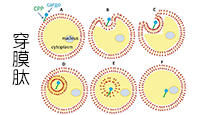
    靶向多肽可以根据其功能和用途分为不同的类别。在PDC(多肽偶联药物)中,靶向多肽通常被分为细胞穿透肽和细胞靶向肽两大类。

    细胞穿透肽:这类多肽能够跨越细胞膜,转运具有生物活性的大分子物质,如多肽、蛋白质、核酸等化学药物,使其顺利进入细胞。一些常见的细胞穿透肽包括Pep-1、Pentratin、PepFact14、Transportan等。

    细胞靶向肽:这类多肽的作用主要是引导化学药物或生物活性分子与特定类型的细胞结合,以提高其靶向性和治疗效率。常见的细胞靶向肽包括PEGA、生长激素抑制素类似物、蛙皮素类似物、RGD肽类等。

  • DOI名称
    10.1166/jnn.2016.11916Evaluation of Osteoblast-Like Cell Viability and Differentiation on the Gly-Arg-Gly-Asp-Ser Peptide Immobilized Titanium Dioxide Nanotube via Chemical Grafting下载
    10.1021/acs.analchem.7b00554High-Affinity RGD-Knottin Peptide as a New Tool for Rapid Evaluation of the Binding Strength of Unlabeled RGD-Peptides to α v β 3, α v β 5, and α 5 β 1 Integrin Receptors下载
    10.1039/D0BM02051FBicyclic RGD peptides enhance nerve growth in synthetic PEG-based Anisogels†下载
  • 暂时没有数据
  • 编号名称CAS号
    164489五肽GRGDS-NH2143648-02-6
    H2N-GRGDS-CONH2
    GRGDS-amide can be coupled to carrriers by its free N-terminus.