400-998-5282
专注多肽 服务科研

"Peptide H-EVDPIGHLY-OH is a Research Peptide with significant interest within the field academic and medical research. Recent citations using H-EVDPIGHLY-OH include the following: Long-peptide cross-presentation by human dendritic cells occurs in vacuoles by peptide exchange on nascent MHC class I molecules W Ma, Y Zhang , N Vigneron, V Stroobant - The Journal of , 2016 - journals.aai.orghttps://journals.aai.org/jimmunol/article/196/4/1711/43276 A MAGE-C2 antigenic peptide processed by the immunoproteasome is recognized by cytolytic T cells isolated from a melanoma patient after successful W Ma, N Vigneron, J Chapiro - journal of cancer, 2011 - Wiley Online Libraryhttps://onlinelibrary.wiley.com/doi/abs/10.1002/ijc.25911 Induction of human leukocyte antigen (HLA)-A2-restricted and MAGE-3-gene-derived peptide-specific cytolytic T lymphocytes using cultured dendritic cells from an S Kanaoka, S Yamasaki, T Okino - Journal of surgical , 1999 - Wiley Online Libraryhttps://onlinelibrary.wiley.com/doi/abs/10.1002/(SICI)1096-9098(199905)71:1%3C16::AID-JSO4%3E3.0.CO;2-A Electrophoresis-related protein modification: Alkylation of carboxy residues revealed by mass spectrometry S Haebel, T Albrecht, K Sparbier, P Walden - , 1998 - Wiley Online Libraryhttps://analyticalsciencejournals.onlinelibrary.wiley.com/doi/abs/10.1002/elps.1150190513 Chemical derivatization strategy for extending the identification of MHC class I immunopeptides R Chen , F Fauteux , S Foote, J Stupak - Analytical , 2018 - ACS Publicationshttps://pubs.acs.org/doi/abs/10.1021/acs.analchem.8b02420 Tumor-specific shared antigenic peptides recognized by human T cells P Van Der Bruggen , Y Zhang , P Chaux - Immunological , 2002 - Wiley Online Libraryhttps://onlinelibrary.wiley.com/doi/abs/10.1034/j.1600-065X.2002.18806.x Production of an antigenic peptide by insulin-degrading enzyme N Parmentier, V Stroobant, D Colau - Nature , 2010 - nature.comhttps://www.nature.com/articles/ni.1862 Facile method for screening clinical T cell receptors for off-target peptide-HLA reactivity MH Gee , X Yang , KC Garcia - BioRxiv, 2018 - biorxiv.orghttps://www.biorxiv.org/content/10.1101/472480.abstract Analysis of the degradation mechanisms of MHC class I-presented tumor antigenic peptides by high performance liquid chromatography/electrospray ionization mass M Ayyoub, B Monsarrat, H Mazarguil - in mass spectrometry, 1998 - Wiley Online Libraryhttps://analyticalsciencejournals.onlinelibrary.wiley.com/doi/abs/10.1002/(SICI)1097-0231(19980515)12:9%3C557::AID-RCM199%3E3.0.CO;2-D Multi-peptide vaccines vialed as peptide mixtures can be stable reagents for use in peptide-based immune therapies KA Chianese-Bullock, ST Lewis, NE Sherman - Vaccine, 2009 - Elsevierhttps://www.sciencedirect.com/science/article/pii/S0264410X09000553 A phase I trial of an HLA-A1 restricted MAGE-3 epitope peptide with incomplete Freunds adjuvant in patients with resected high-risk melanoma JS Weber, FL Hua, L Spears, V Marty - Journal of , 1999 - journals.lww.comhttps://journals.lww.com/immunotherapy-journal/abstract/1999/09000/a_phase_i_trial_of_an_hla_a1_restricted_mage_3.7.aspx Peptide vaccines for cancer J Weber - Cancer investigation, 2002 - Taylor & Francishttps://www.tandfonline.com/doi/abs/10.1081/CNV-120001149 HLA Photoaffinity Labeling Reveals Overlapping Binding of Homologous Melanoma-associated Gene Peptides by HLA-A1, HLA-A29, and HLA-B44 (âË\x86â\x80\x94) IF Luescher, P Romero, D Kuznetsov, D Rimoldi - Journal of Biological , 1996 - ASBMBhttps://www.jbc.org/article/S0021-9258(18)95440-2/abstract Identification of five new HLA-B* 3501-restricted epitopes derived from common melanoma-associated antigens, spontaneously recognized by tumor-infiltrating H Benlalam, B Linard, Y Guilloux - The Journal of , 2003 - journals.aai.orghttps://journals.aai.org/jimmunol/article/171/11/6283/36031 A MAGE-3 peptide recognized on HLA-B35 and HLA-A1 by cytolytic T lymphocytes ES Schultz, Y Zhang , R Knowles, J Tine - Tissue , 2001 - Wiley Online Libraryhttps://onlinelibrary.wiley.com/doi/abs/10.1034/j.1399-0039.2001.057002103.x Induction of anti-tumor cytotoxic T lymphocytes in normal humans using primary cultures and synthetic peptide epitopes. E Celis, V Tsai, C Crimi, R DeMars - Proceedings of the , 1994 - National Acad Scienceshttps://www.pnas.org/doi/abs/10.1073/pnas.91.6.2105 Exosomes as a tumor vaccine: enhancing potency through direct loading of antigenic peptides DH Hsu, P Paz, G Villaflor, A Rivas - Journal of , 2003 - journals.lww.comhttps://journals.lww.com/immunotherapy-journal/fulltext/2003/09000/exosomes_as_a_tumor_vaccine__enhancing_potency.7.aspx Identification of a titin-derived HLA-A1-presented peptide as a cross-reactive target for engineered MAGE A3-directed T cells BJ Cameron, AB Gerry, J Dukes, JV Harper - Science translational , 2013 - science.orghttps://www.science.org/doi/abs/10.1126/scitranslmed.3006034 CrossDome: an interactive R package to predict cross-reactivity risk using immunopeptidomics databases AF Fonseca, DA Antunes - Frontiers in Immunology, 2023 - frontiersin.orghttps://www.frontiersin.org/journals/immunology/articles/10.3389/fimmu.2023.1142573/full Stability and CTL-activity of P40/ELA melanoma vaccine candidate A Beck , L Goetsch, T Champion, MC Bussat, JP Aubry - Biologicals, 2001 - Elsevierhttps://www.sciencedirect.com/science/article/pii/S1045105601903069 Peptides as tools and drugs for immunotherapies A Beck , C Klinguer-Hamour, MC Bussat - Journal of Peptide , 2007 - Wiley Online Libraryhttps://onlinelibrary.wiley.com/doi/abs/10.1002/psc.852"
化学预防肽是有助于预防疾病(例如癌症或糖尿病)的发作或发展的肽。这些肽可以源自天然来源,例如大豆或牛奶,也可以来自肽模拟物的设计,也可以源自使用合成肽进行的肽筛选。据认为,这些肽中的某些可以充当细胞周期的调节剂,其调节使细胞通过复制周期前进所需的蛋白质的产生和功能。另外,现在有越来越多的证据表明特定的饮食模式,食物和饮料以及其他饮食物质可以而且确实可以预防癌症。越来越多的流行病学研究表明,食物,营养和身体活动在预防和改变癌症过程中很重要。包括植物蛋白酶抑制剂,乳铁蛋白,乳铁蛋白,凝集素和lunasin在内的不同类型的食物蛋白和多肽似乎起着化学预防剂的作用。如今,蛋白质和多肽被认为是一组营养保健品,在预防癌症的不同阶段(包括起始,促进和进展)方面显示出潜力。此外,已经发现在植物中发现的一些蛋白酶抑制剂,例如豆类和大豆,是有效的癌发生抑制剂。致癌作用是引发和促进癌症的过程。 Bowman-Birk抑制剂和Kunitz胰蛋白酶抑制剂就在其中。目前,这些化合物在致癌作用中的生物学功能主要归因于抑制癌细胞的侵袭和转移,但是,其作用机理仍不完全清楚,需要进一步研究以充分阐明它们。
多肽H2N-Glu-Val-Asp-Pro-Ile-Gly-His-Leu-Tyr-COOH的合成步骤:
1、合成CTC树脂:称取1.45g CTC Resin(如初始取代度约为0.97mmol/g)和1.69mmol Fmoc-Tyr(tBu)-OH于反应器中,加入适量DCM溶解氨基酸(需要注意,此时CTC树脂体积会增大好几倍,避免DCM溶液过少),再加入4.22mmol DIPEA(Mw:129.1,d:0.740g/ml),反应2-3小时后,可不抽滤溶液,直接加入1ml的HPLC级甲醇,封端半小时。依次用DMF洗涤2次,甲醇洗涤1次,DCM洗涤一次,甲醇洗涤一次,DCM洗涤一次,DMF洗涤2次(这里使用甲醇和DCM交替洗涤,是为了更好地去除其他溶质,有利于后续反应)。得到 Fmoc-Tyr(tBu)-CTC Resin。结构图如下:

2、脱Fmoc:加3倍树脂体积的20%Pip/DMF溶液,鼓氮气30分钟,然后2倍树脂体积的DMF 洗涤5次。得到 H2N-Tyr(tBu)-CTC Resin 。(此步骤脱除Fmoc基团,茚三酮检测为蓝色,Pip为哌啶)。结构图如下:

3、缩合:取4.22mmol Fmoc-Leu-OH 氨基酸,加入到上述树脂里,加适当DMF溶解氨基酸,再依次加入8.44mmol DIPEA,4.01mmol HBTU。反应30分钟后,取小样洗涤,茚三酮检测为无色。用2倍树脂体积的DMF 洗涤3次树脂。(洗涤树脂,去掉残留溶剂,为下一步反应做准备)。得到Fmoc-Leu-Tyr(tBu)-CTC Resin。氨基酸:DIPEA:HBTU:树脂=3:6:2.85:1(摩尔比)。结构图如下:

4、依次循环步骤二、步骤三,依次得到
H2N-Leu-Tyr(tBu)-CTC Resin
Fmoc-His(Trt)-Leu-Tyr(tBu)-CTC Resin
H2N-His(Trt)-Leu-Tyr(tBu)-CTC Resin
Fmoc-Gly-His(Trt)-Leu-Tyr(tBu)-CTC Resin
H2N-Gly-His(Trt)-Leu-Tyr(tBu)-CTC Resin
Fmoc-Ile-Gly-His(Trt)-Leu-Tyr(tBu)-CTC Resin
H2N-Ile-Gly-His(Trt)-Leu-Tyr(tBu)-CTC Resin
Fmoc-Pro-Ile-Gly-His(Trt)-Leu-Tyr(tBu)-CTC Resin
H2N-Pro-Ile-Gly-His(Trt)-Leu-Tyr(tBu)-CTC Resin
Fmoc-Asp(OtBu)-Pro-Ile-Gly-His(Trt)-Leu-Tyr(tBu)-CTC Resin
H2N-Asp(OtBu)-Pro-Ile-Gly-His(Trt)-Leu-Tyr(tBu)-CTC Resin
Fmoc-Val-Asp(OtBu)-Pro-Ile-Gly-His(Trt)-Leu-Tyr(tBu)-CTC Resin
H2N-Val-Asp(OtBu)-Pro-Ile-Gly-His(Trt)-Leu-Tyr(tBu)-CTC Resin
Fmoc-Glu(OtBu)-Val-Asp(OtBu)-Pro-Ile-Gly-His(Trt)-Leu-Tyr(tBu)-CTC Resin
以上中间结构,均可在专肽生物多肽计算器-多肽结构计算器中,一键画出。
最后再经过步骤二得到 H2N-Glu(OtBu)-Val-Asp(OtBu)-Pro-Ile-Gly-His(Trt)-Leu-Tyr(tBu)-CTC Resin,结构如下:

5、切割:6倍树脂体积的切割液(或每1g树脂加8ml左右的切割液),摇床摇晃 2小时,过滤掉树脂,用冰无水乙醚沉淀滤液,并用冰无水乙醚洗涤沉淀物3次,最后将沉淀物放真空干燥釜中,常温干燥24小试,得到粗品H2N-Glu-Val-Asp-Pro-Ile-Gly-His-Leu-Tyr-COOH。结构图见产品结构图。
切割液选择:1)TFA:H2O=95%:5%、TFA:H2O=97.5%:2.5%
2)TFA:H2O:TIS=95%:2.5%:2.5%
3)三氟乙酸:茴香硫醚:1,2-乙二硫醇:苯酚:水=87.5%:5%:2.5%:2.5%:2.5%
(前两种适合没有容易氧化的氨基酸,例如Trp、Cys、Met。第三种适合几乎所有的序列。)
6、纯化冻干:使用液相色谱纯化,收集目标峰液体,进行冻干,获得蓬松的粉末状固体多肽。不过这时要取小样复测下纯度 是否目标纯度。
7、最后总结:
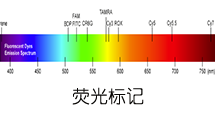
杭州专肽生物技术有限公司(ALLPEPTIDE https://www.allpeptide.com)主营定制多肽合成业务,提供各类长肽,短肽,环肽,提供各类修饰肽,如:荧光标记修饰(CY3、CY5、CY5.5、CY7、FAM、FITC、Rhodamine B、TAMRA等),功能基团修饰肽(叠氮、炔基、DBCO、DOTA、NOTA等),同位素标记肽(N15、C13),订书肽(Stapled Peptide),脂肪酸修饰肽(Pal、Myr、Ste),磷酸化修饰肽(P-Ser、P-Thr、P-Tyr),环肽(酰胺键环肽、一对或者多对二硫键环),生物素标记肽,PEG修饰肽,甲基化修饰肽
以上所有内容,为专肽生物原创内容,请勿发布到其他网站上。